
Overall first, second, and third place from the Supercomputing Challenge awards, newest season first. Each note says what the project set out to do. Photos and figures come from the students’ final reports or the awards ceremony.
2025–26
36th Challenge. Awards at Los Alamos, April 2026.
First place
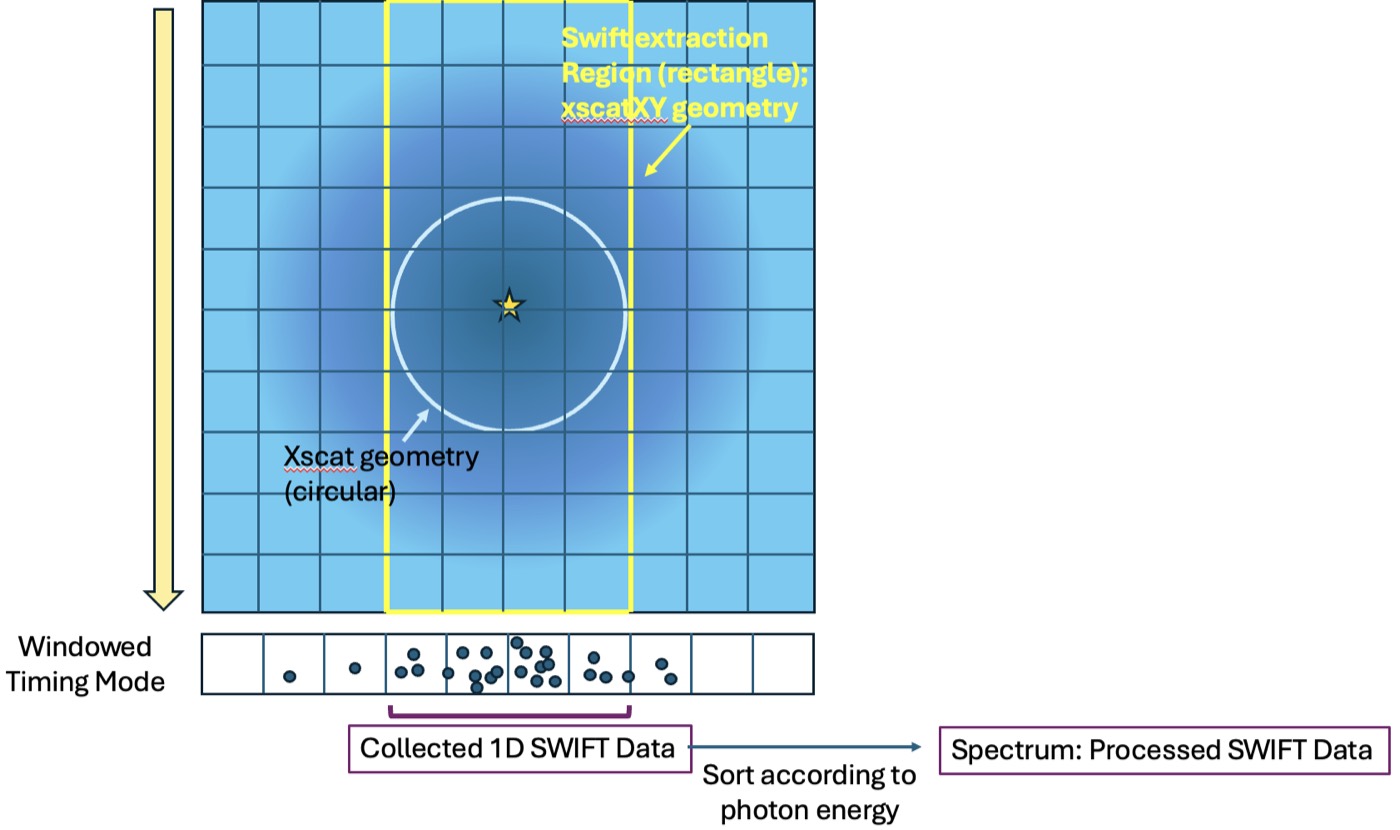
Dust Busters
Tate D. Plohr · Los Alamos High School
A dust-scattering model for Swift X-ray telescope data. The new geometry is rectangular, like the telescope’s windowed-timing readout, so dust and pile-up distort black-hole spin estimates less.
Second place
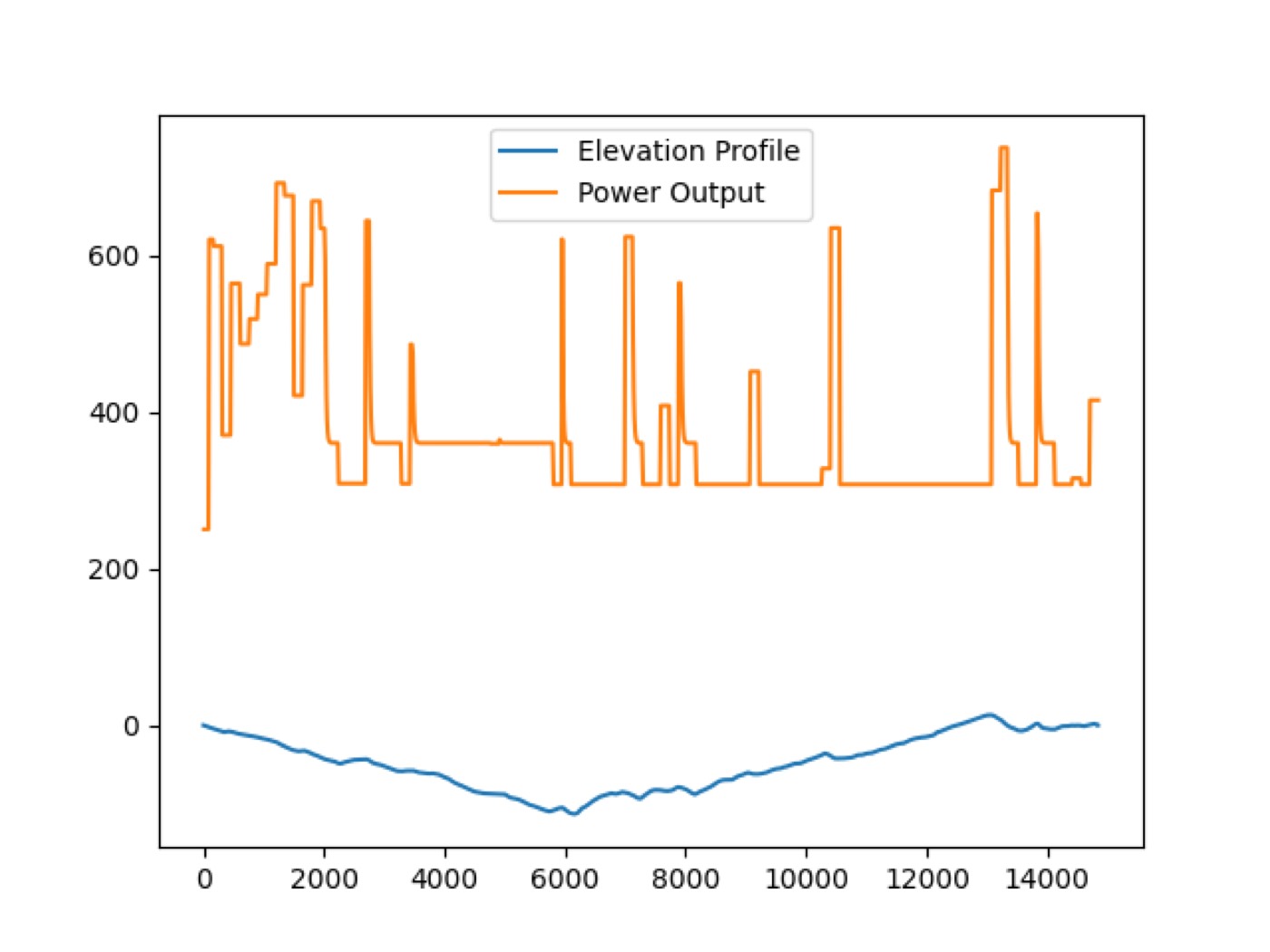
Pacing optimization for cycling
Jaden Rand · Santa Fe Preparatory School
Trains a neural network by evolution, using physiology and course physics, to choose how hard to ride on a given route.
Third place
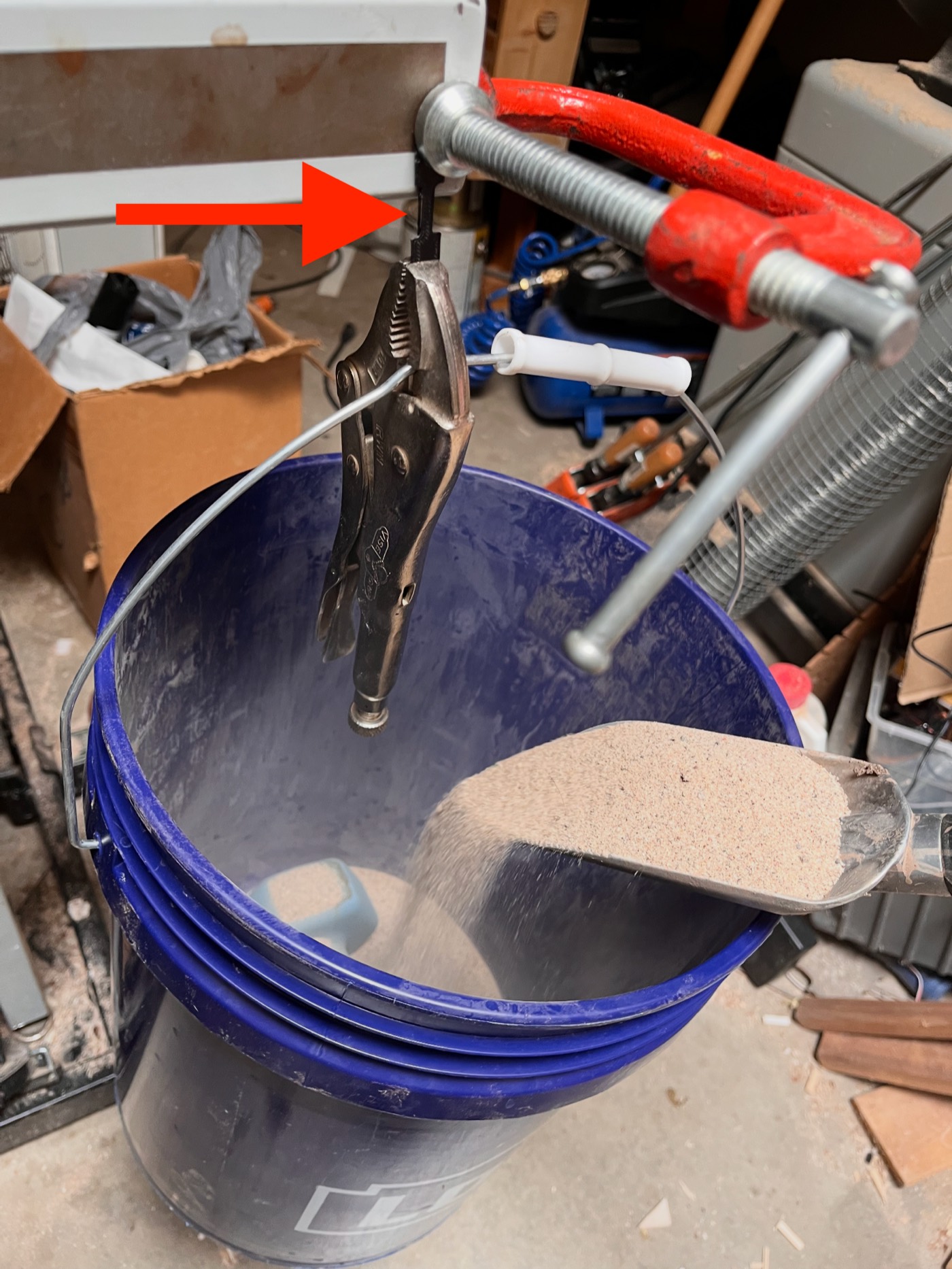
3D-printed PLA, from atoms to tensile tests
Harrison Schiek · Albuquerque Academy
Atomistic simulations of polylactic acid, then physical pull-tests of printed samples, to see how polymer tangling changes strength.
2024–25
35th Challenge. Expo and awards at Santa Fe Community College, April 2025.
First place
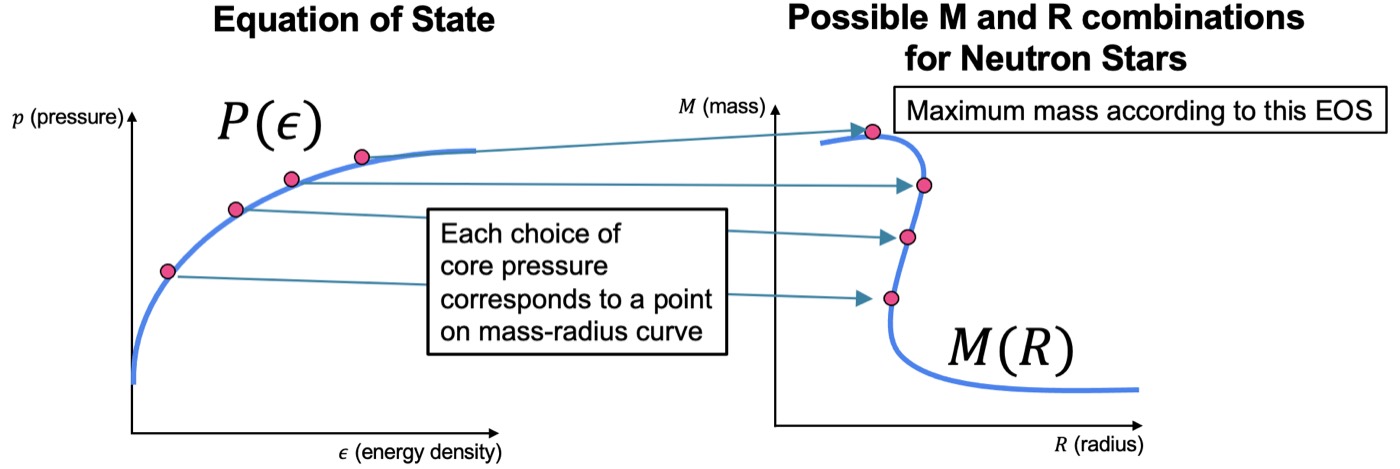
Neutron star equation of state
Tate Plohr · Los Alamos High School
Uses astronomical observations to narrow which equations of state can describe the matter inside a neutron star, relating core pressure to the star’s mass and radius.
Second place
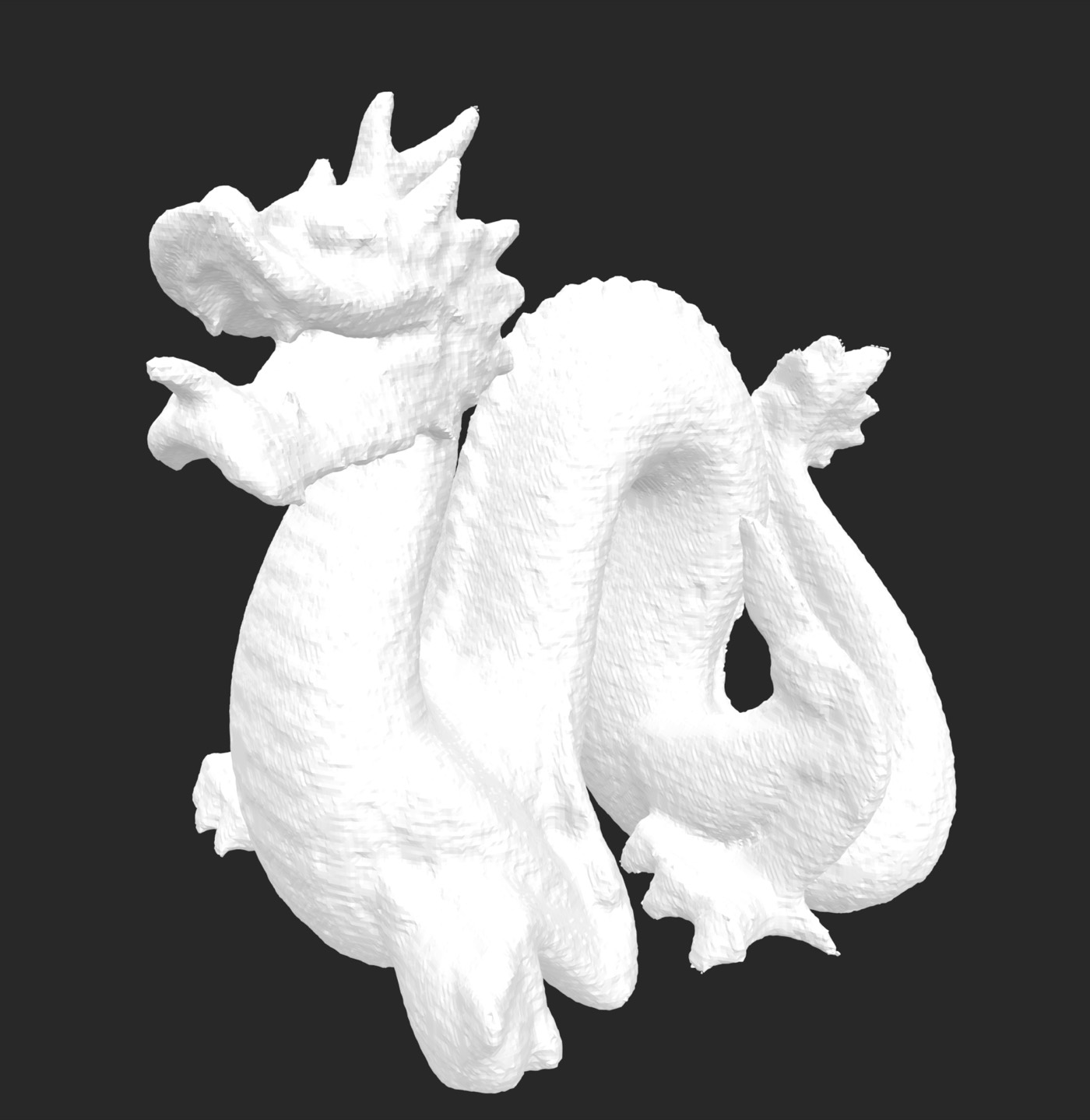
Point cloud surface reconstruction
Andrew Morgan · Los Alamos High School
Turns an unordered cloud of 3D points into a watertight mesh, using a level-set method, a sparse octree, and surface-tension smoothing.
Third place
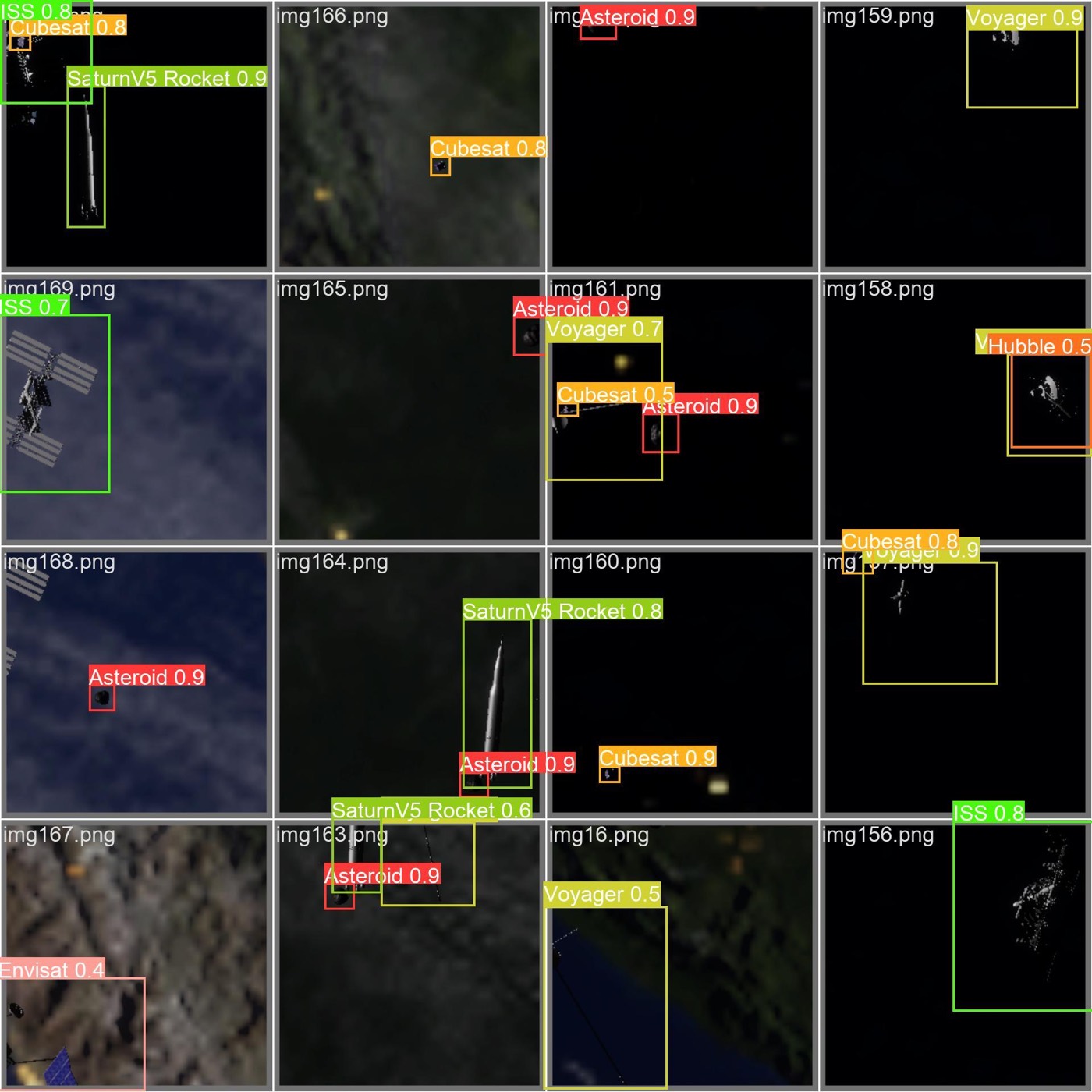
Orbital debris detection
Hadwyn Link and Ximena Serna · La Cueva High School
A You Only Look Once model trained on simulated orbits to detect and classify debris, satellites, and rockets in low Earth orbit.
2023–24
34th Challenge. Expo at Los Alamos, April 2024.
First place
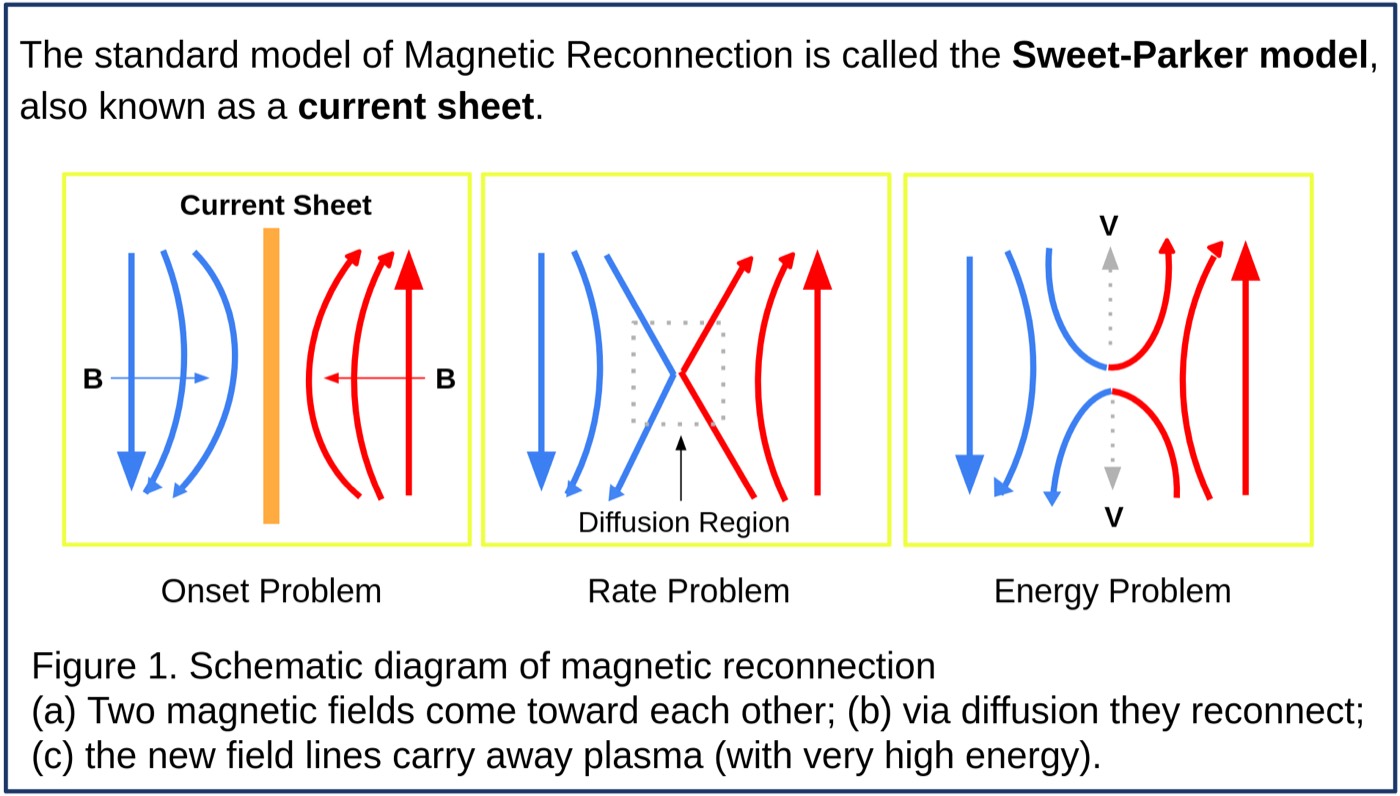
Magnetic reconnection
Tate D. Plohr · Los Alamos High School
Simulates a current sheet to test when the Sweet-Parker model can describe magnetic reconnection in solar flares and coronal mass ejections.
Second place
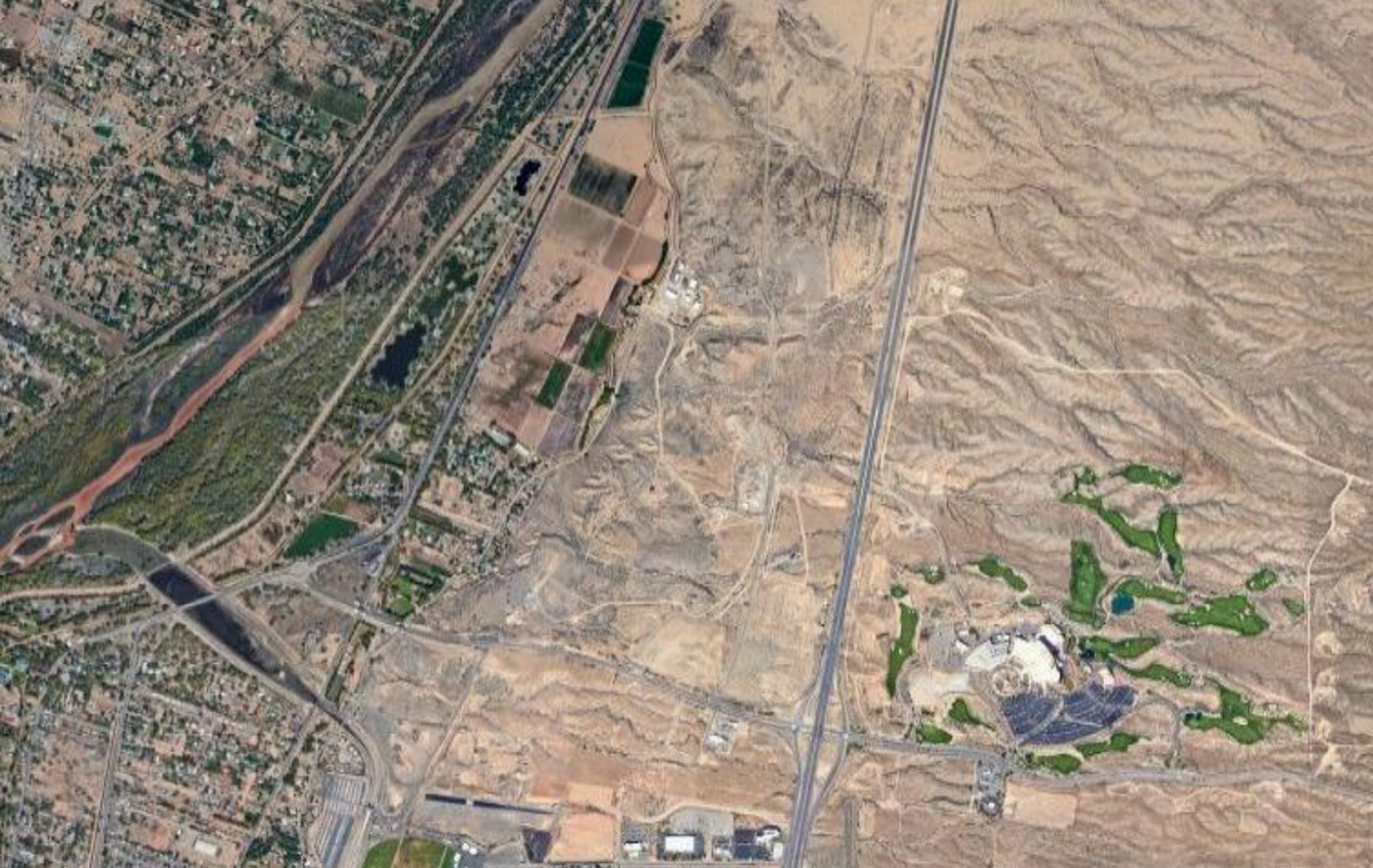
Water runoff and diversion
Harrison Schiek · Albuquerque Academy
A terrain simulation of where water runs off and how it can be diverted. The report uses the Rio Grande valley as a study landscape.
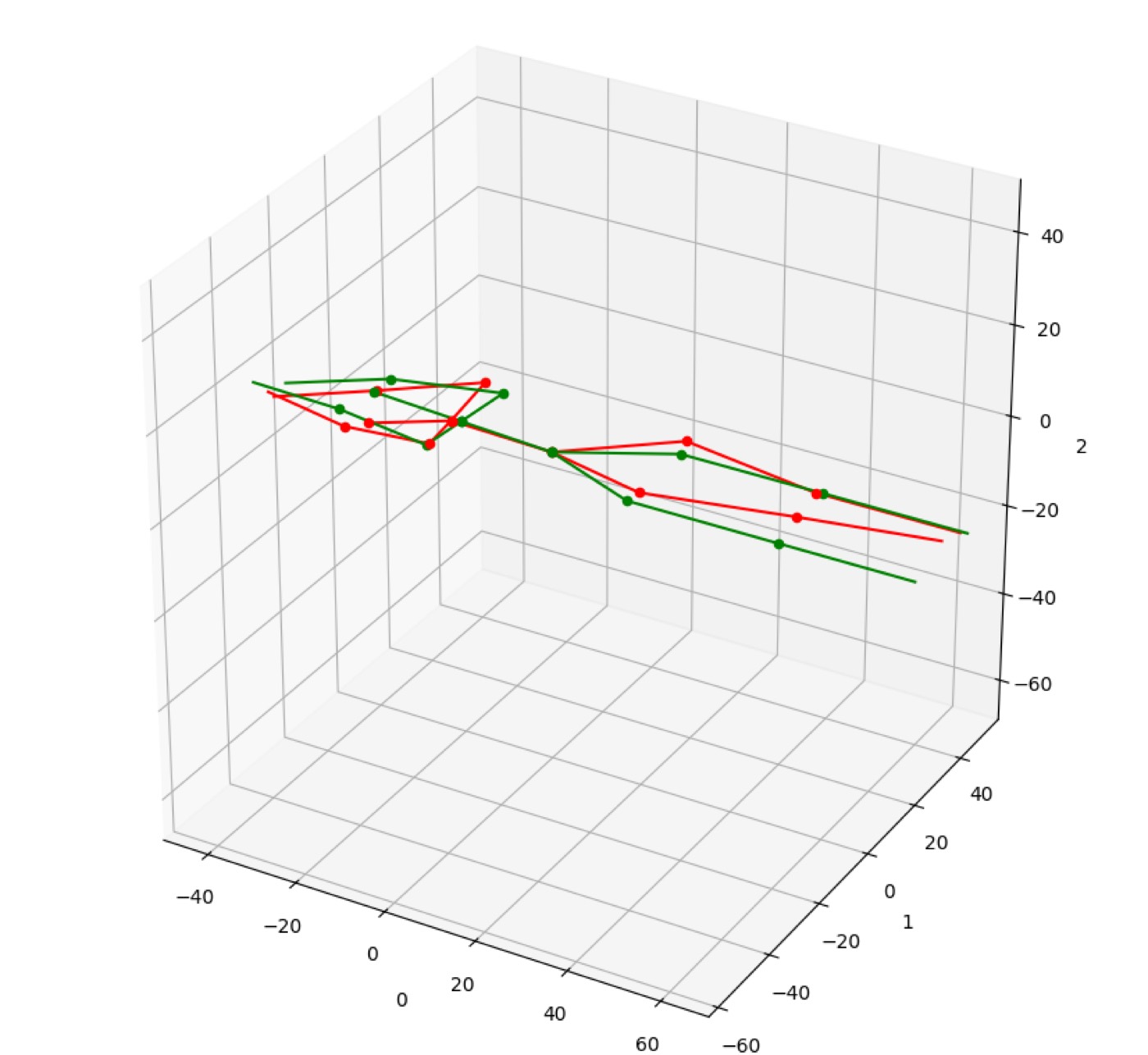
Third place
CHASM
Luke Rand, Greta Swanson, and Nandita Ganesan · Santa Fe Preparatory School
Computational Hydrodynamic Analysis for Speed Maximization. The model traces streamlines so a shape can be judged for drag before it is built.
2022–23
33rd Challenge.
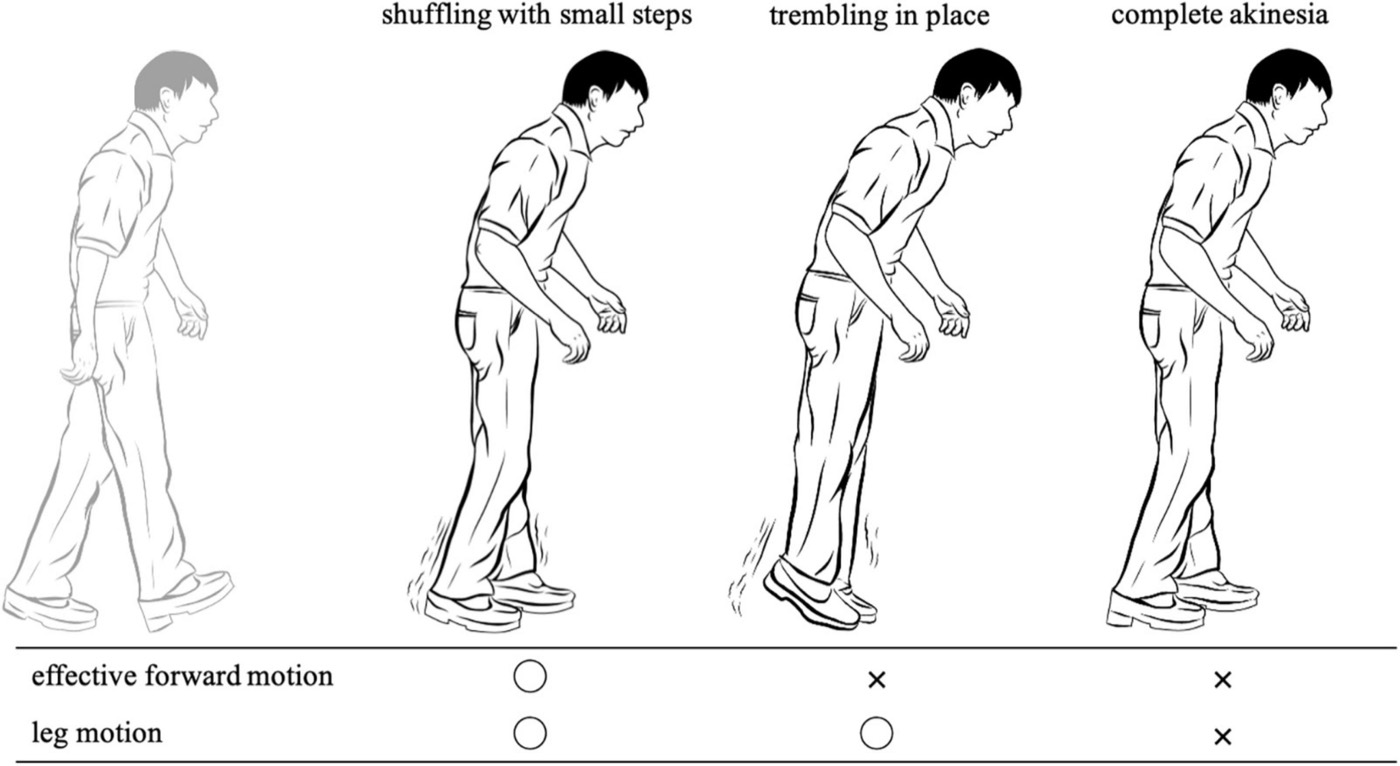
First place
Parkinson’s gait monitor
Abitpal Gyawali, Aditya Koushik, Aiden Shoppel, Amandeep Prasankumar, and Venkata Menta · La Cueva High School
A phone app that uses machine learning to recognize activity and detect freezing of gait in Parkinson’s disease.
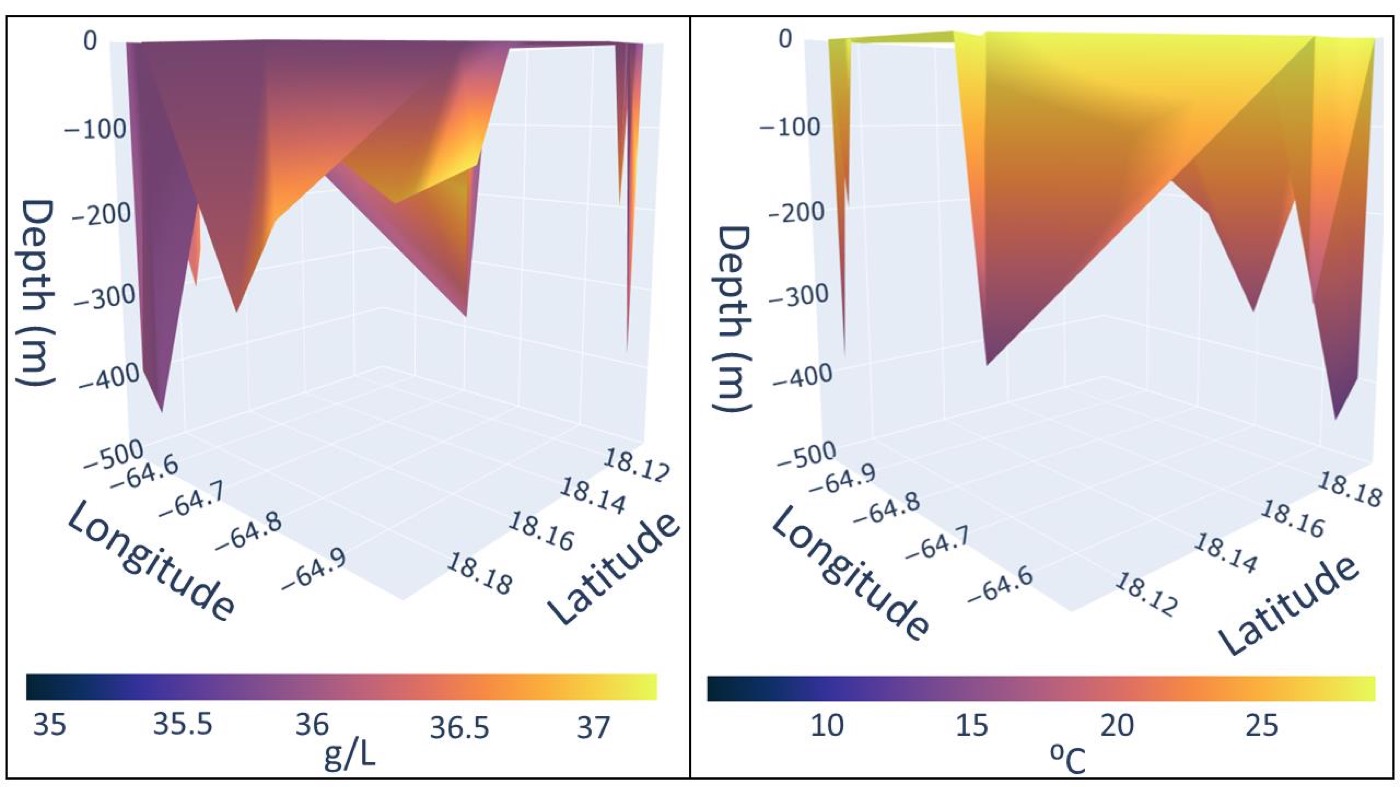
Second place
Ocean litter and an underwater vehicle
Daniel Kim · Los Alamos High School
Maps human-made ocean litter with an autonomous underwater vehicle, combining detection with position so the trash can be located.
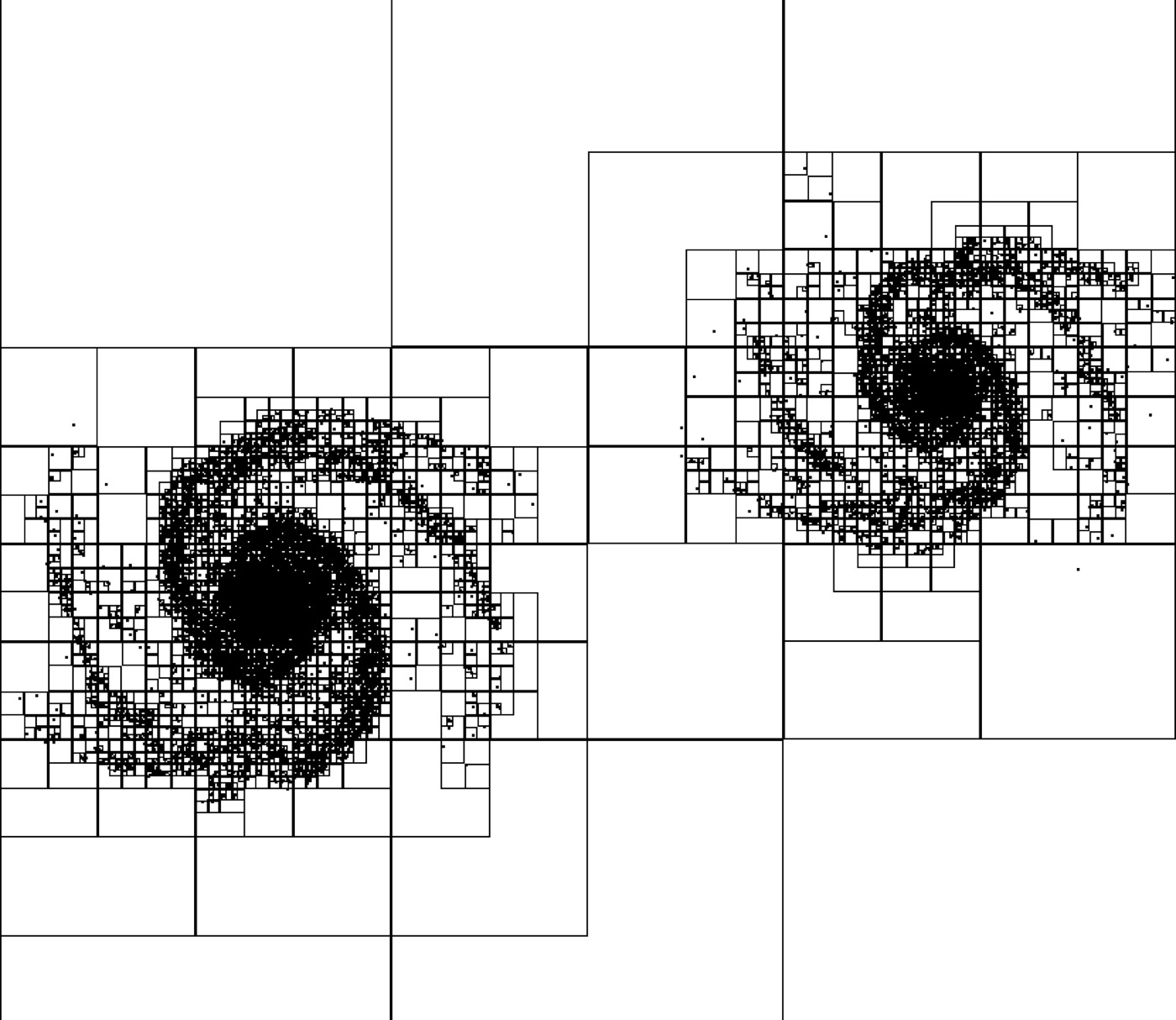
Third place
SINGS n-body simulator
Tristan Eggenberger · Sandia High School
A Simple Interactive N-body Gravitation Simulator. Particles pull on each other under Newton’s law and can form galaxy-like spirals.
2021–22
32nd Challenge.
First place
Thrust-vector rockets
Daniel Kim and Andres Iturregui · Los Alamos High School
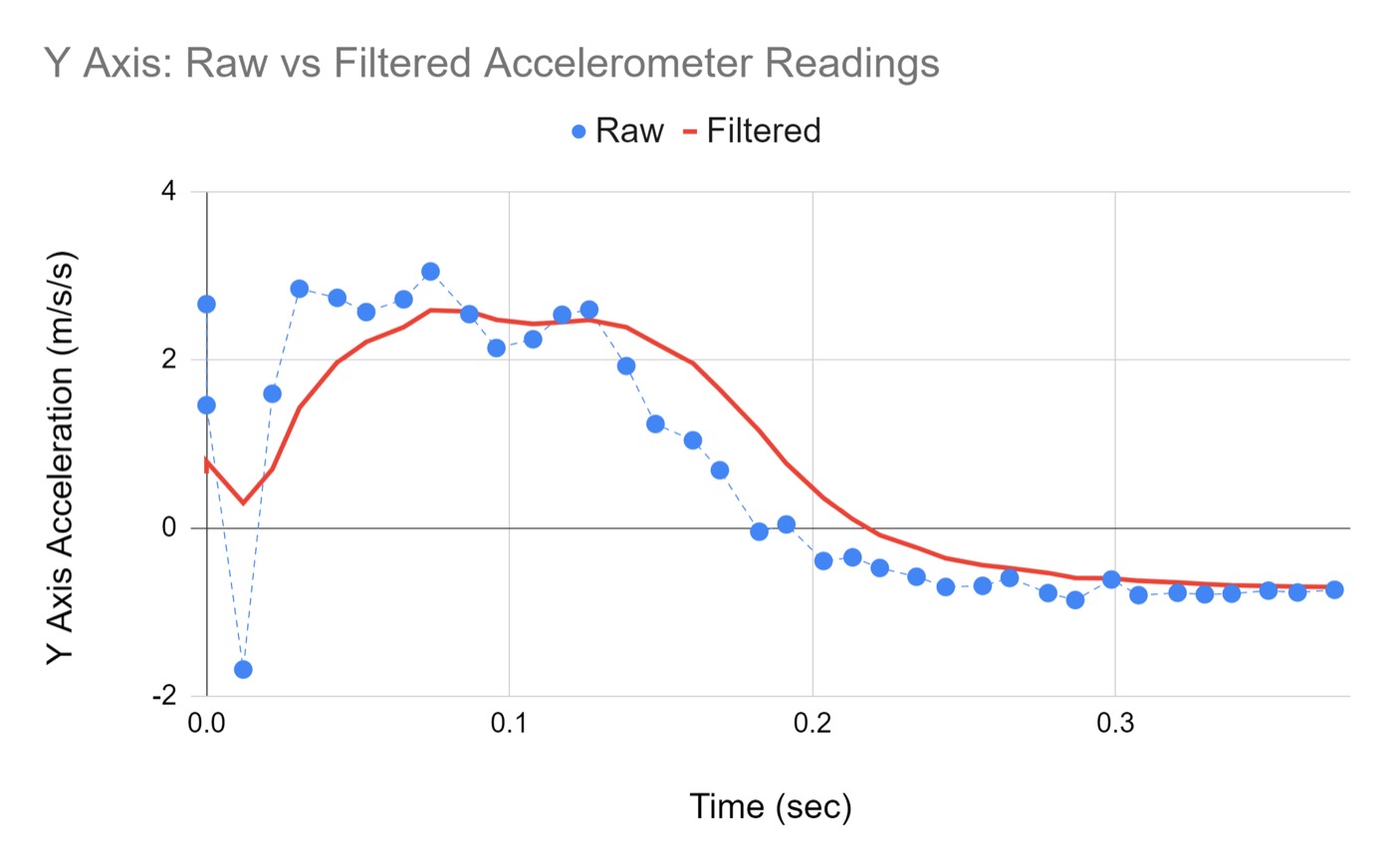
A control algorithm and simulation for rockets that steer by tilting the engine, including a small physical gimbal and filtered accelerometer data.
Second place
EL HEAVN
Django Beaudoin, Elisea Jackson, Madelyn Kingston, and Lexington Smith · New Mexico School for the Arts
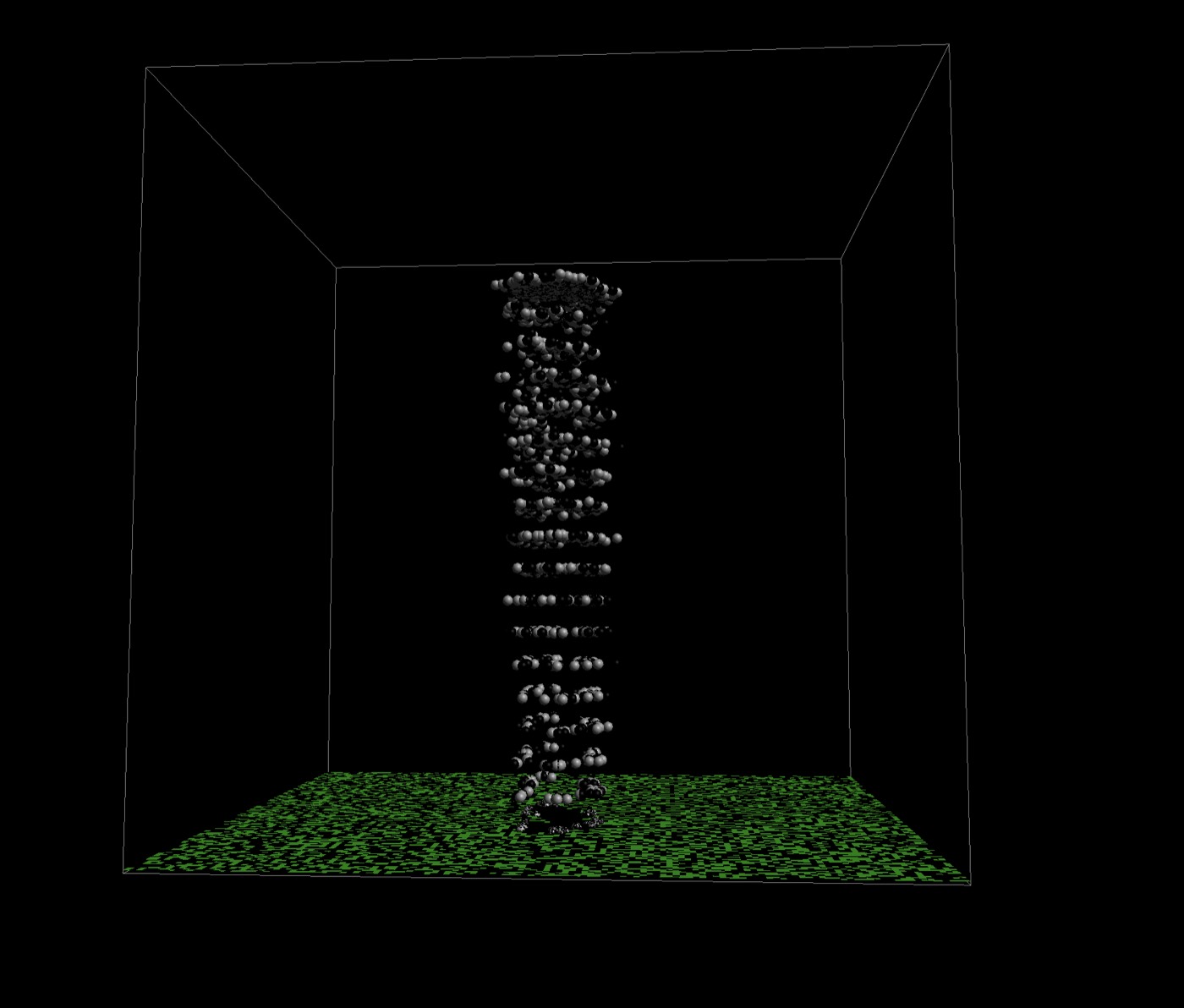
Hearing, exploring, and visualizing clouds (nubes). The team modeled smoke and plume motion and compared the simulation with small burn experiments. The awards slides also spell the title EL HAVEN.
Third place
DNA methylation and Alzheimer’s
Aditya Koushik and Abitpal Gyawali · La Cueva High School
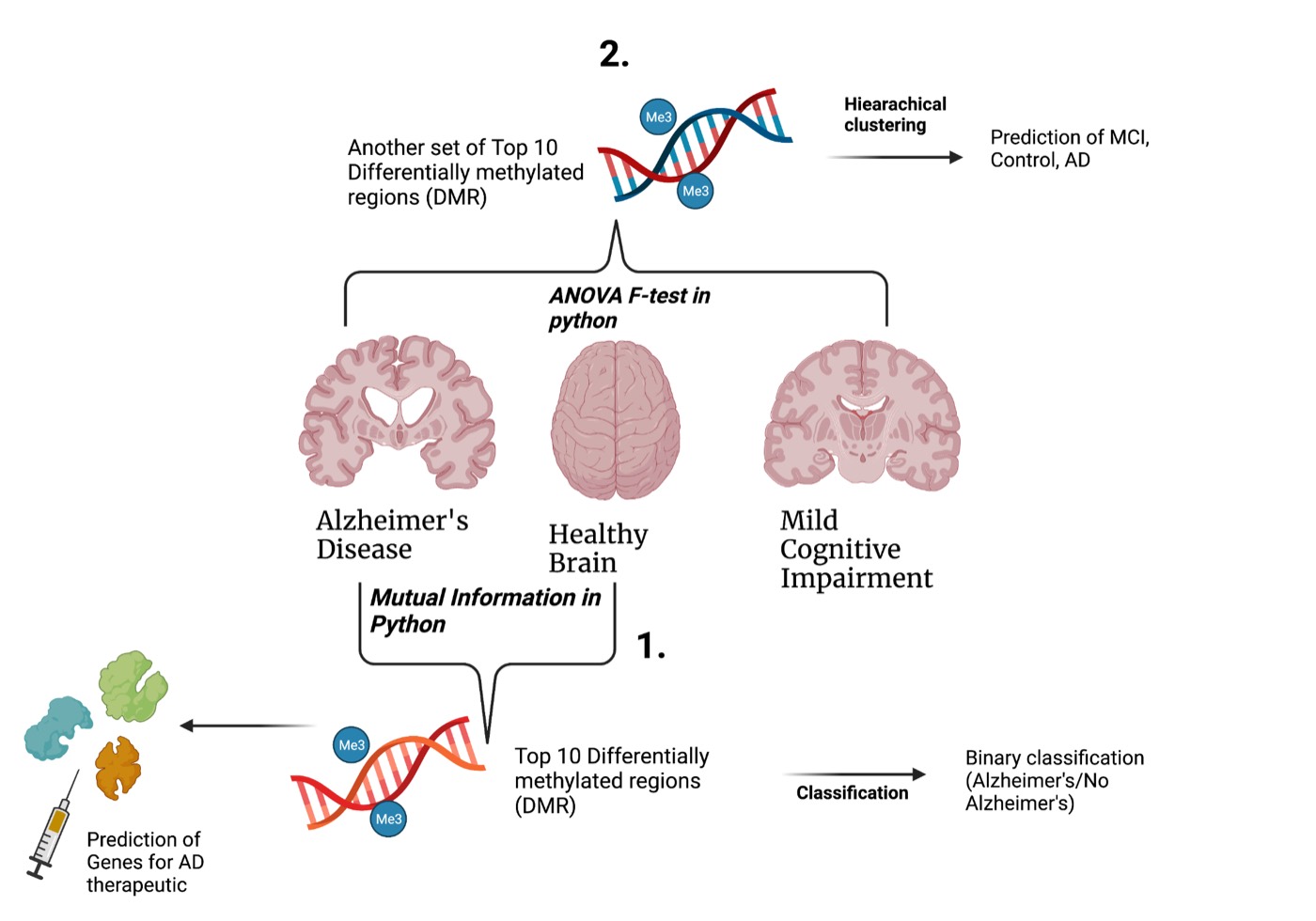
Machine learning on differentially methylated regions of DNA to separate Alzheimer’s disease, mild cognitive impairment, and healthy brains.
2020–21
31st Challenge, held virtually.
First place
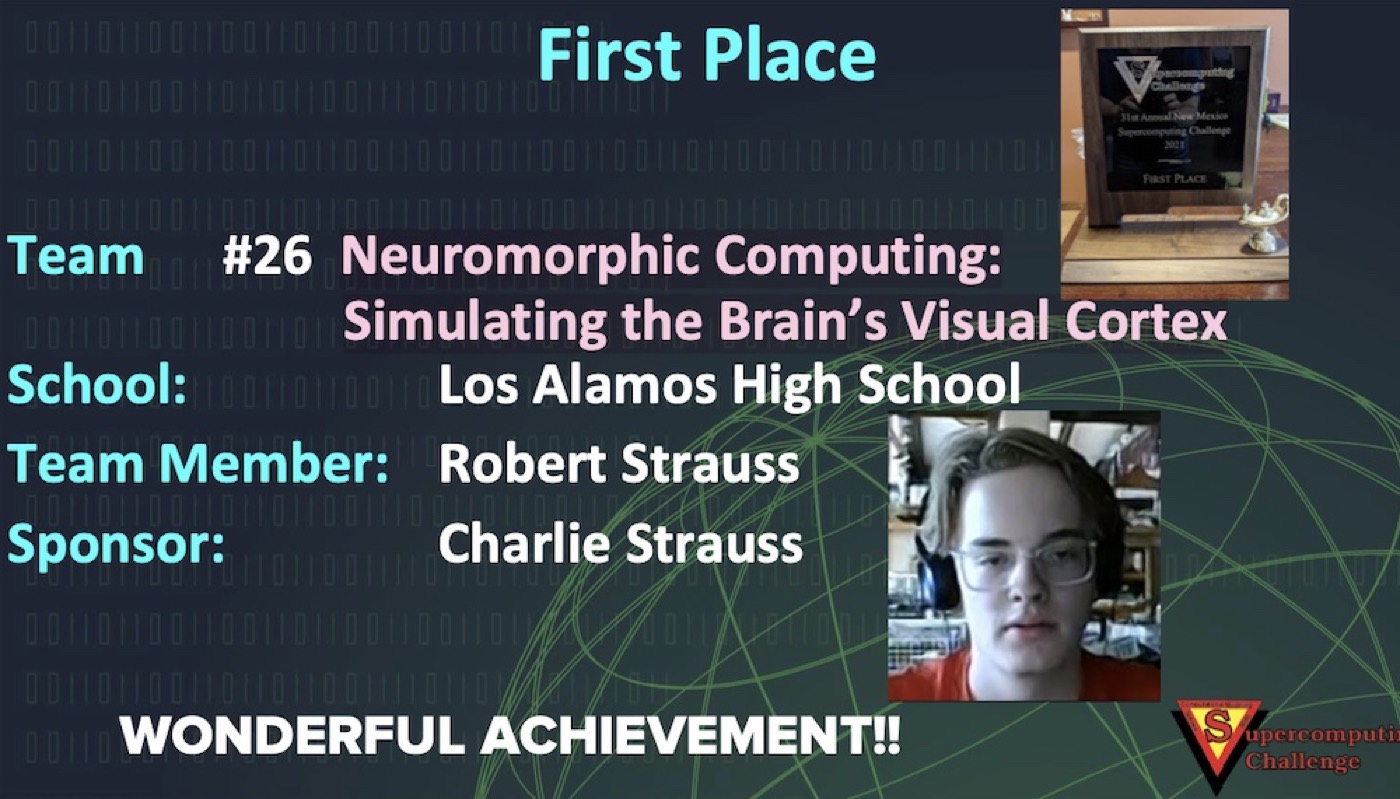
Simulating the visual cortex
Robert Strauss · Los Alamos High School
A neuromorphic-computing model of how the brain’s visual cortex processes what the eyes see.
Second place
SIN(language)
Rowan Jansens, Madelyn Kingston, and Brandon Morrison · New Mexico School for the Arts
Visualizes acoustics during COVID-19 with spatial signal processing.
Third place
Ground-ozone forecast
Eliana Juarez, Sofia Juarez, and Graciela Rodriguez · V. Sue Cleveland High School
Machine learning to forecast when ground-level ozone will reach dangerous levels.
2019–20
30th Challenge. Awards in April 2020. The compiled finalist booklet is not on the public archive; places are from the awards list.
First place
Forest fire risk in New Mexico
Rowan Jansens, Madelyn Kingston, Maya Landess, and Grandon Morrison · New Mexico School for the Arts
A model of where forest-fire risk is highest across New Mexico.
Second place
Enhancer–gene connections
Lillian Petersen · Los Alamos High School
An activity-by-contact model that predicts which enhancers connect to which genes, as a tool for cancer research.
Third place
Project CO-OP
Cody Johnston, Elias Zheng, Lucas Ward, and Rio Sessions · Socorro High School
Third place in the 2020 awards. The public awards list names the project and the team.